Culture Camp

I had the privilege of being a part of the first ever culture camp put on by Regina Public Schools. Myself, Jeff Cappo, Sarah Longman, Lori Milligan, and Wayne Tranberg were able to create this awesome event for my Native Studies 20/30 class from Thom Collegiate. The purpose of the camp was for students to learn Indigenous content in Indigenous ways.
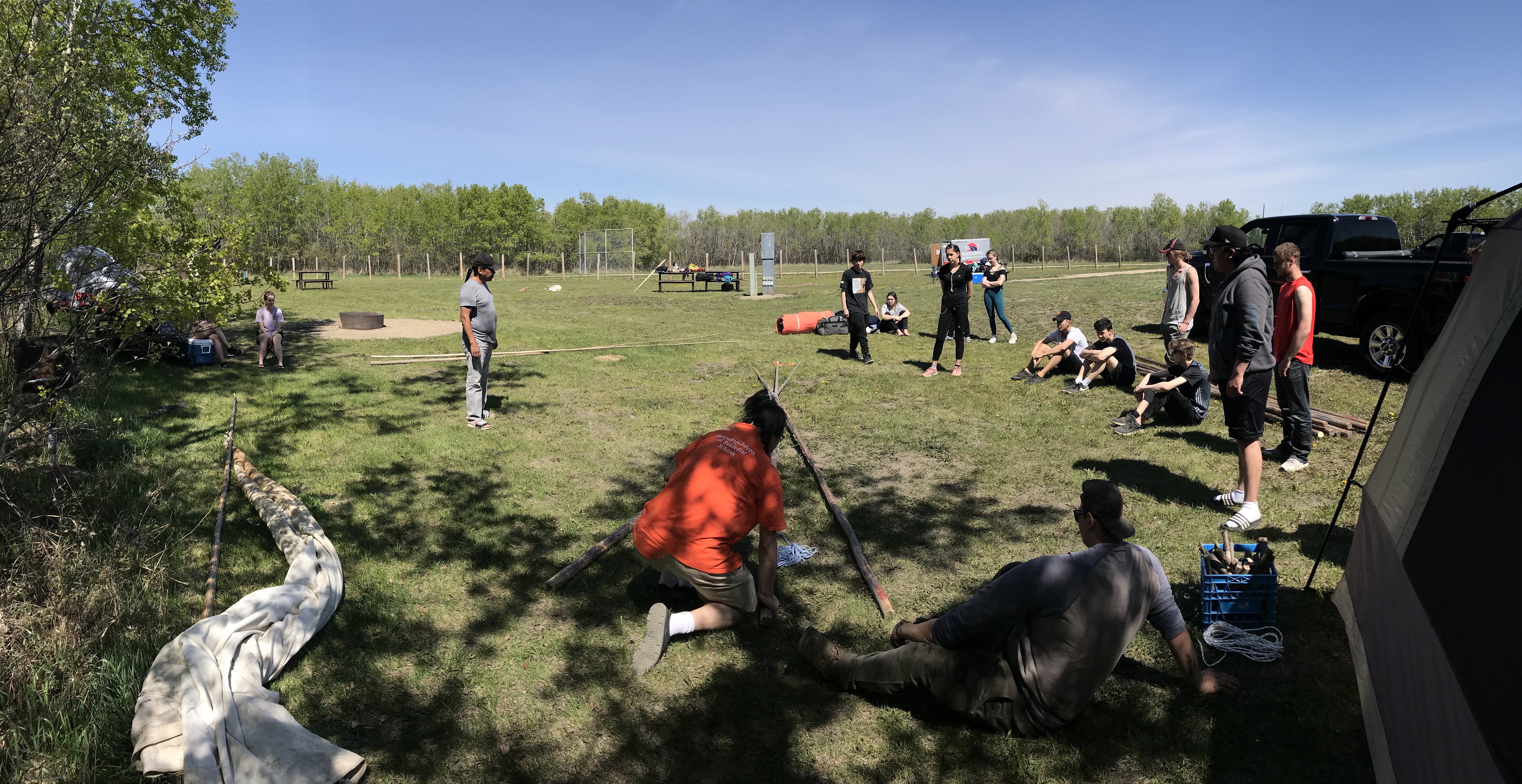
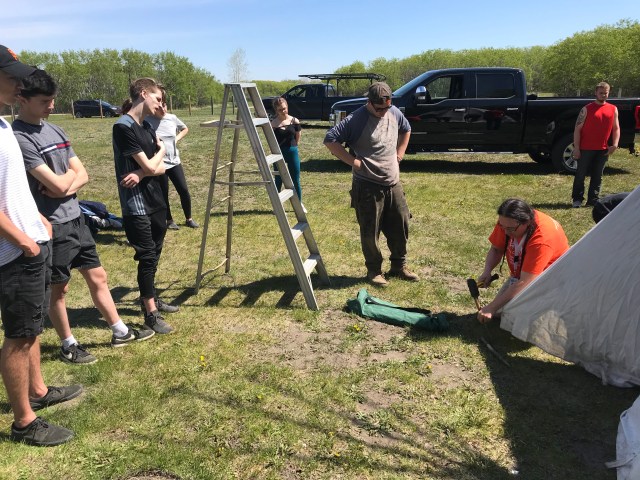
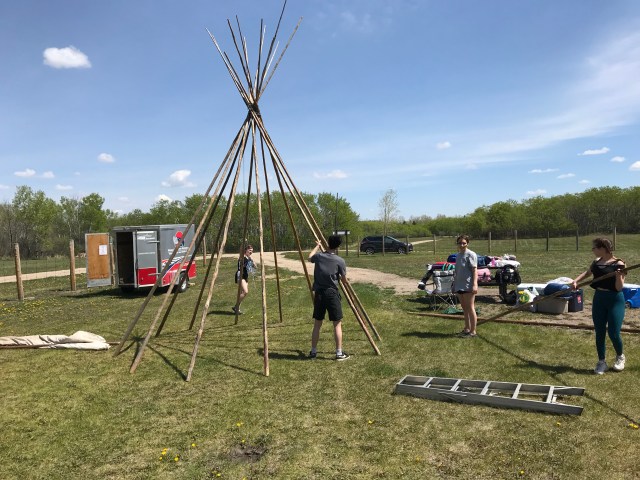
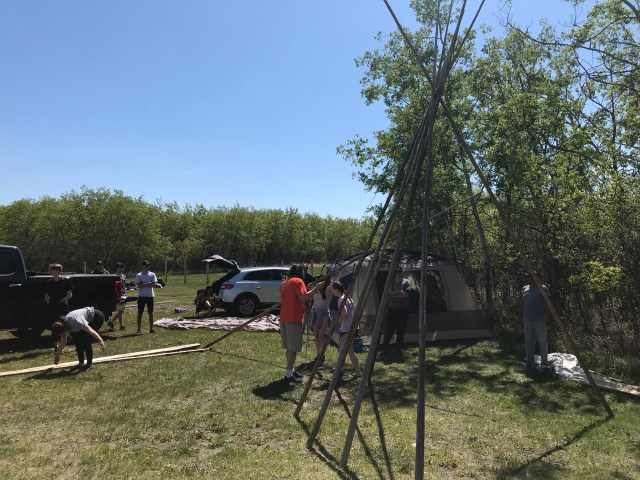
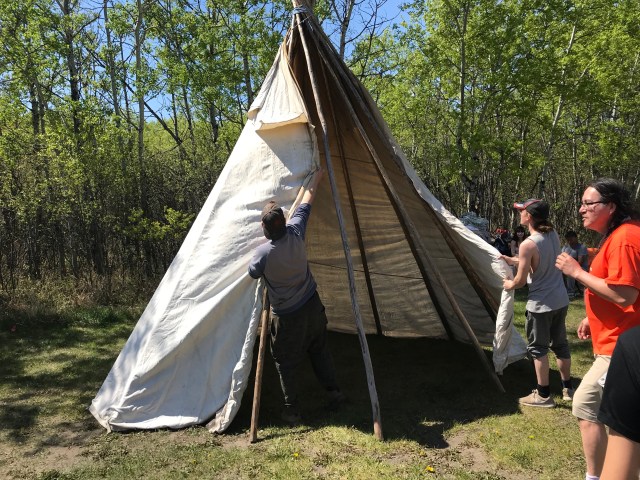
The kids were taught by Gary Gott how to set up a tipi.

The camp took place at Echo Valley Provincial Park in the Qu’appelle Valley. The students were able to experience and participate in a number of activities that focused on Indigenous knowledge, teachings, and traditional practices. While there, students were able to learn about the tipi and how to set up their own. They also learned about traditional mens and women’s roles.
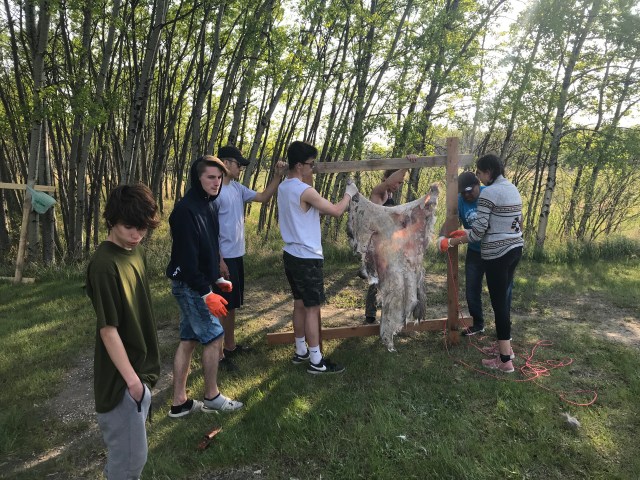
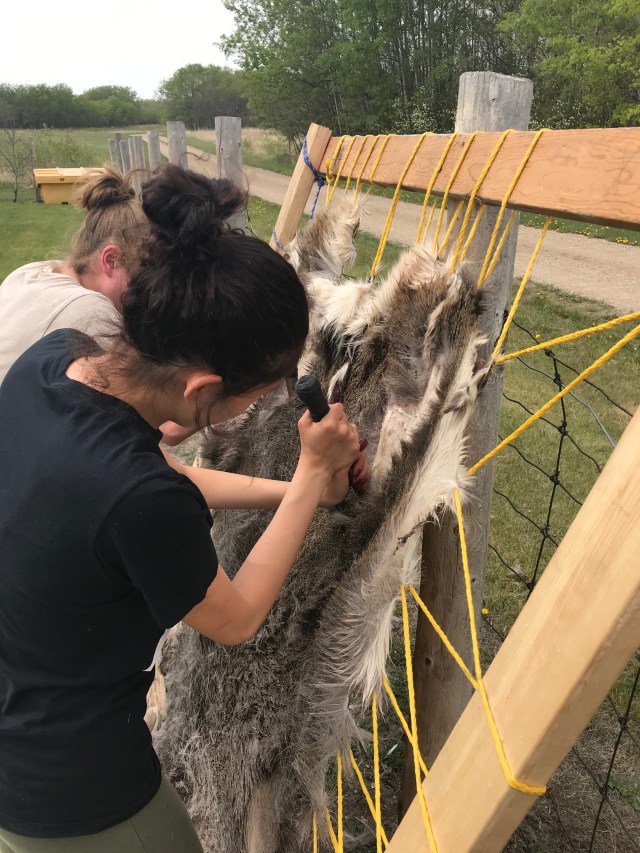
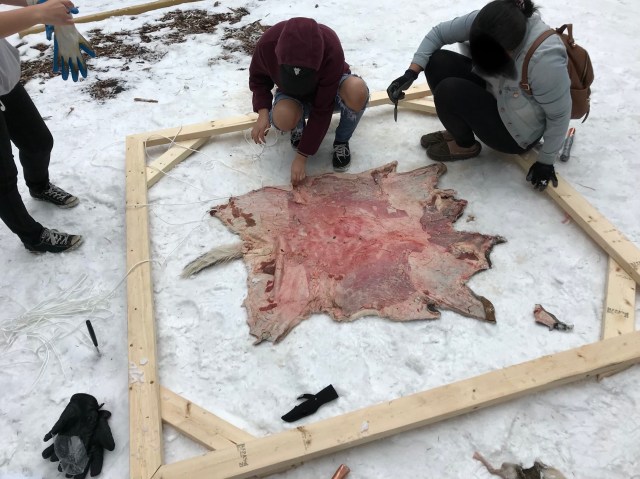
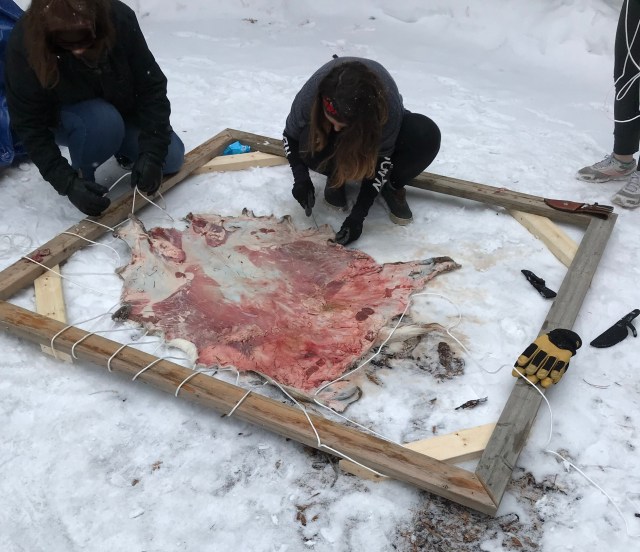
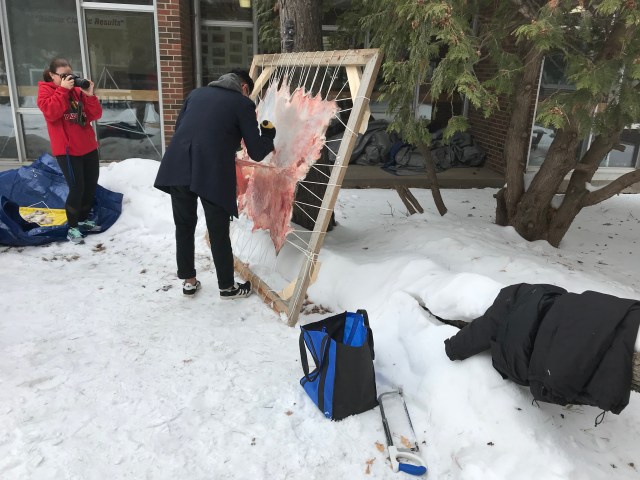
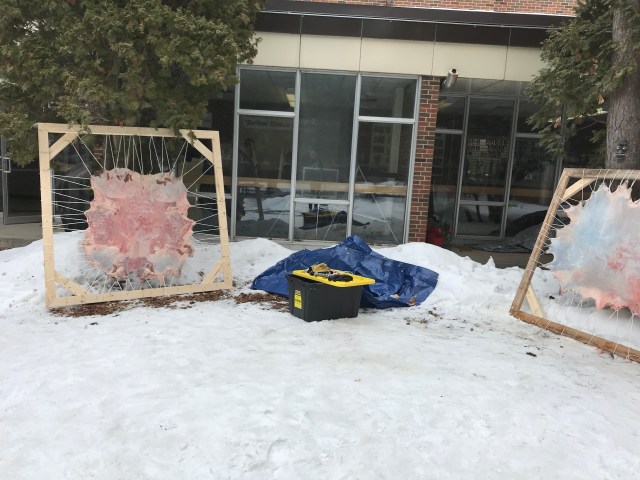
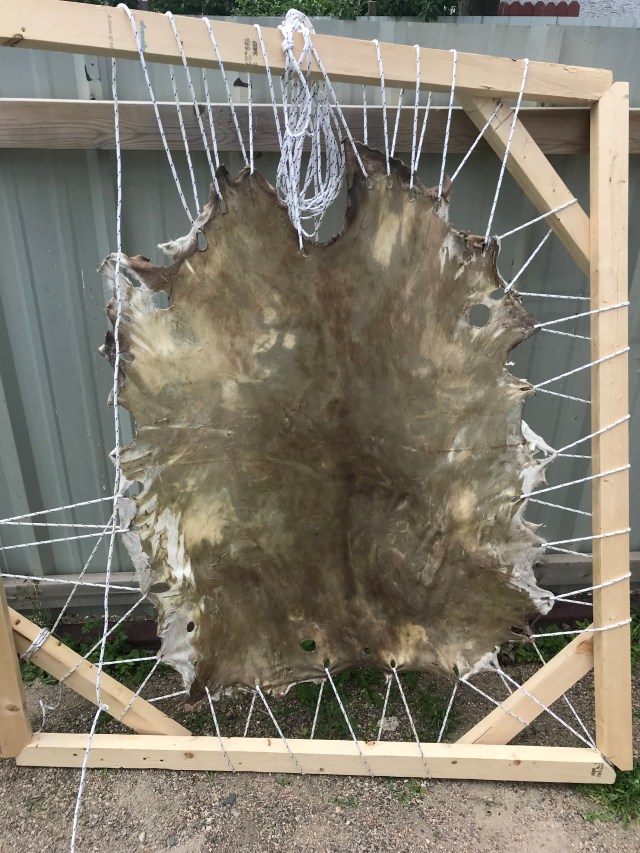
Students also had a chance to flesh and dehair deer hides. We were able to teach them the process and they got hands on experience doing the work themselves.

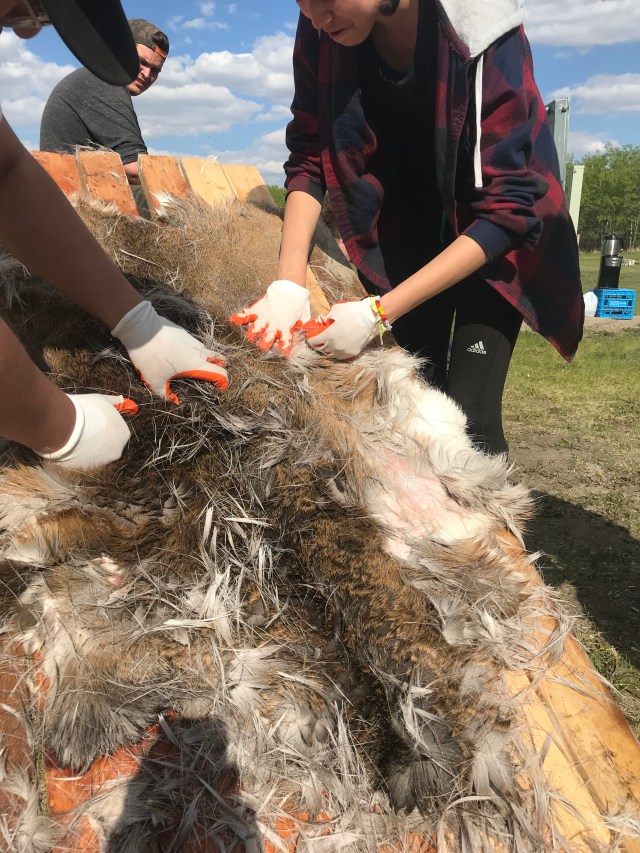
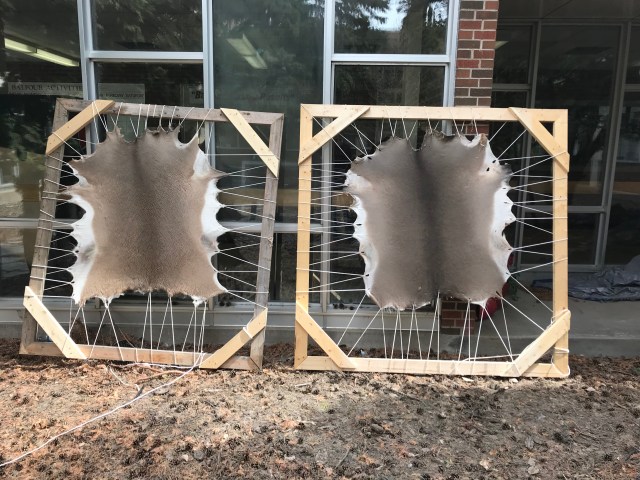
The prepared hides will be used to make drums for the students and the school.
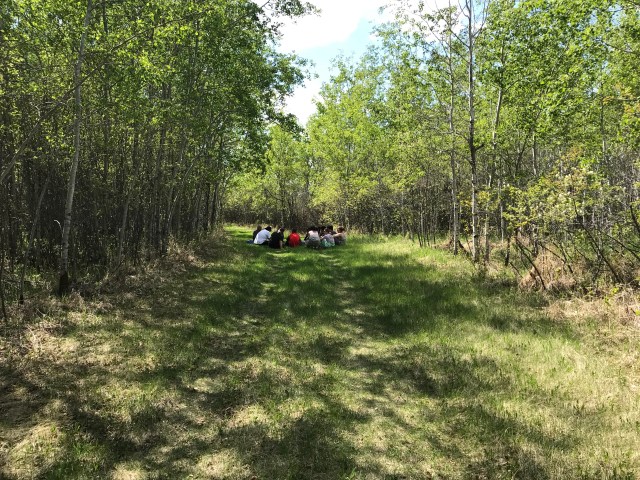
Students also had the opportunity to gain traditional teachings from knowledge keepers including Joseph Naytowhow (Nehiyaw from Sturgeon Lake), and Keith Ryder (Dakota from Standing Buffalo). We had the opportunity to go on a medicine walk, learn songs, and hear traditional stories and teachings.

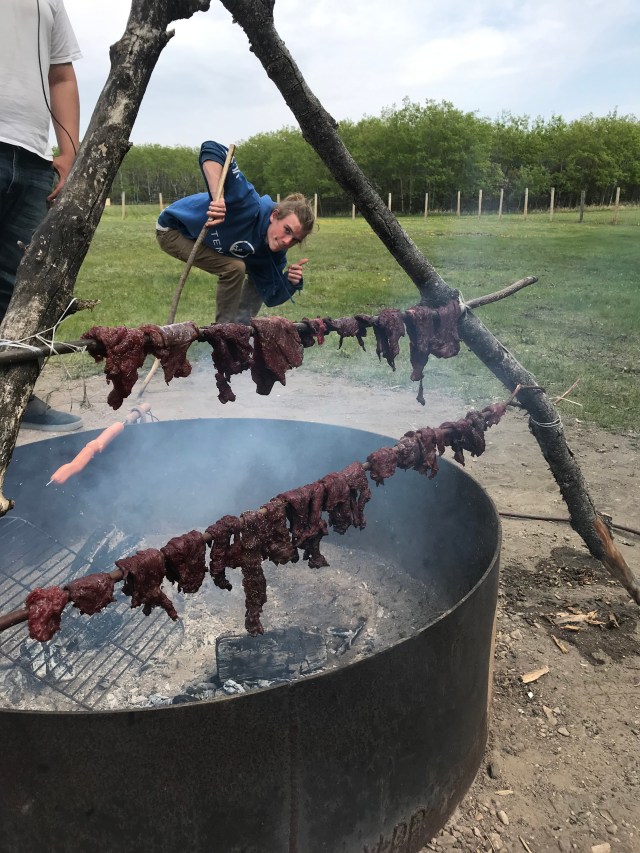
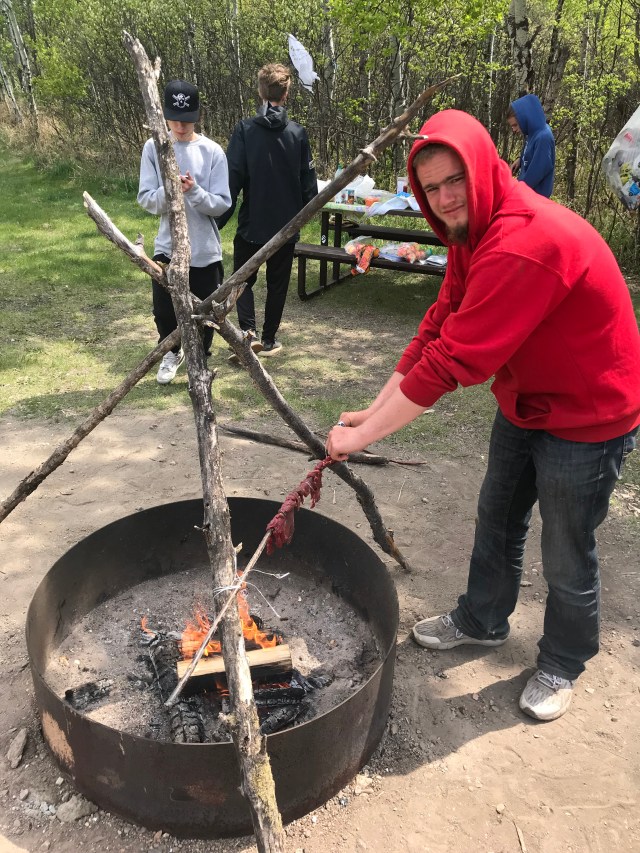
Students also had the opportunity to go on hikes, make traditional bows, play traditional games, go canoeing and fishing, and smoke wild elk meat.

Bow making

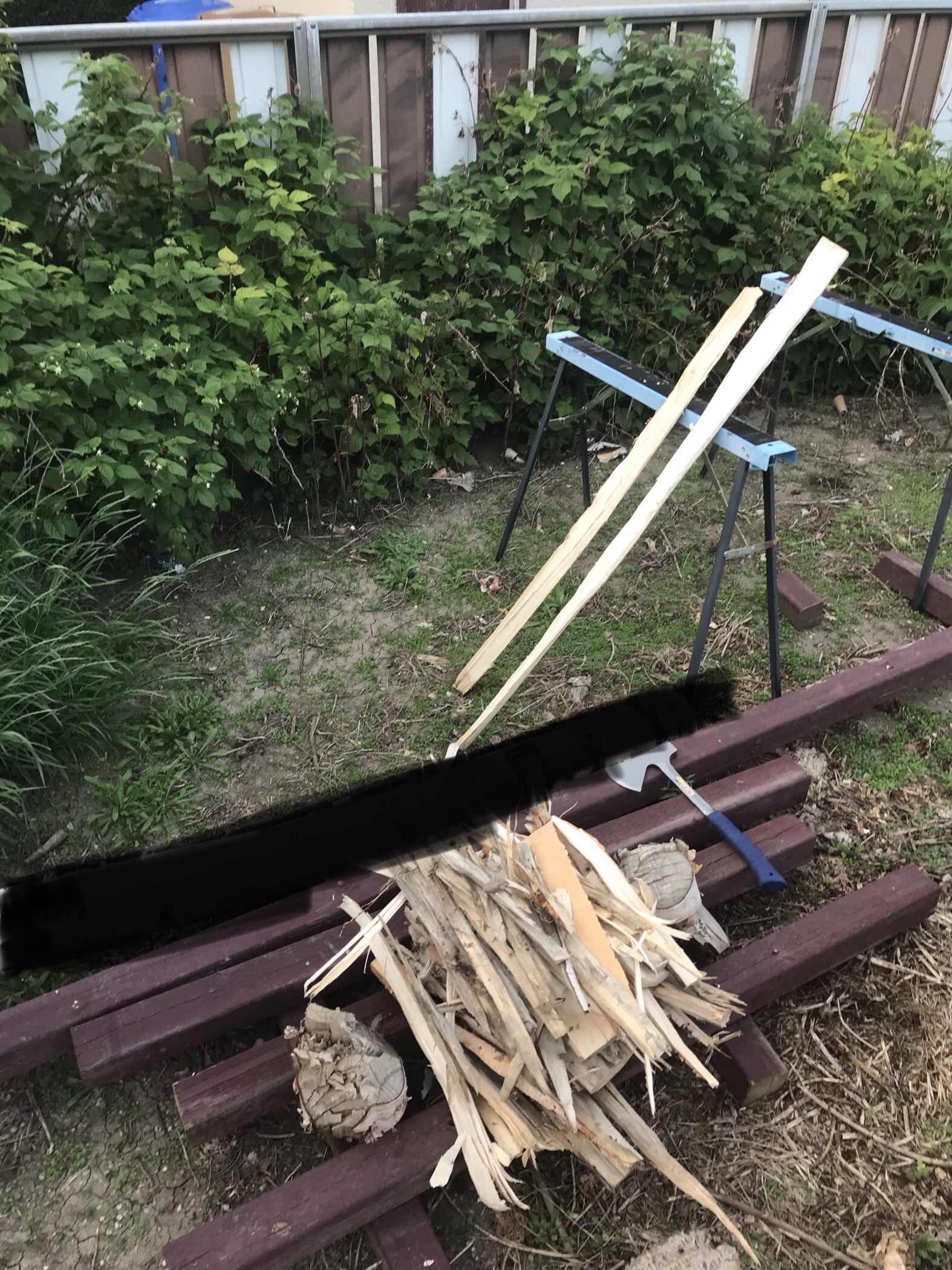
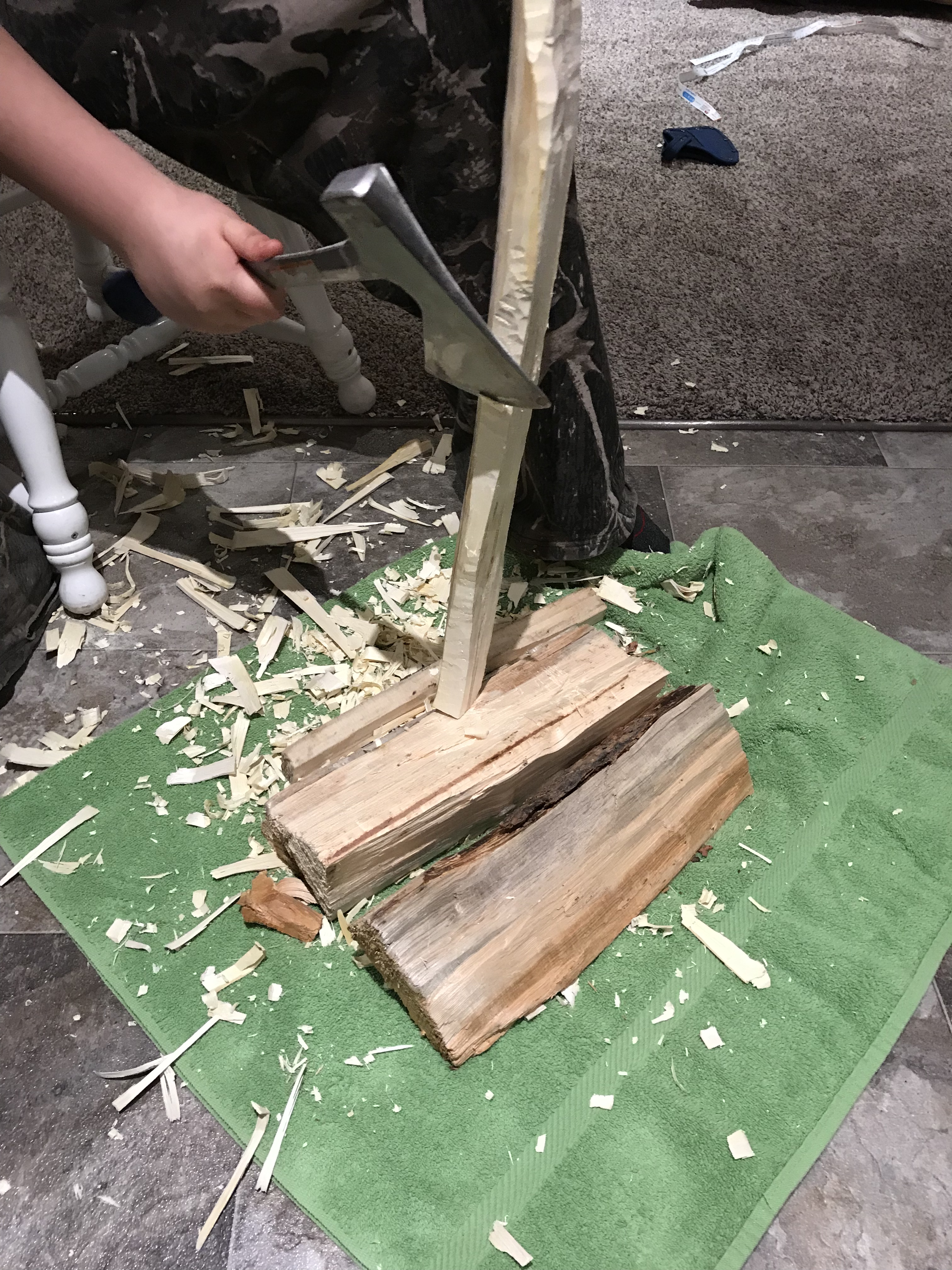
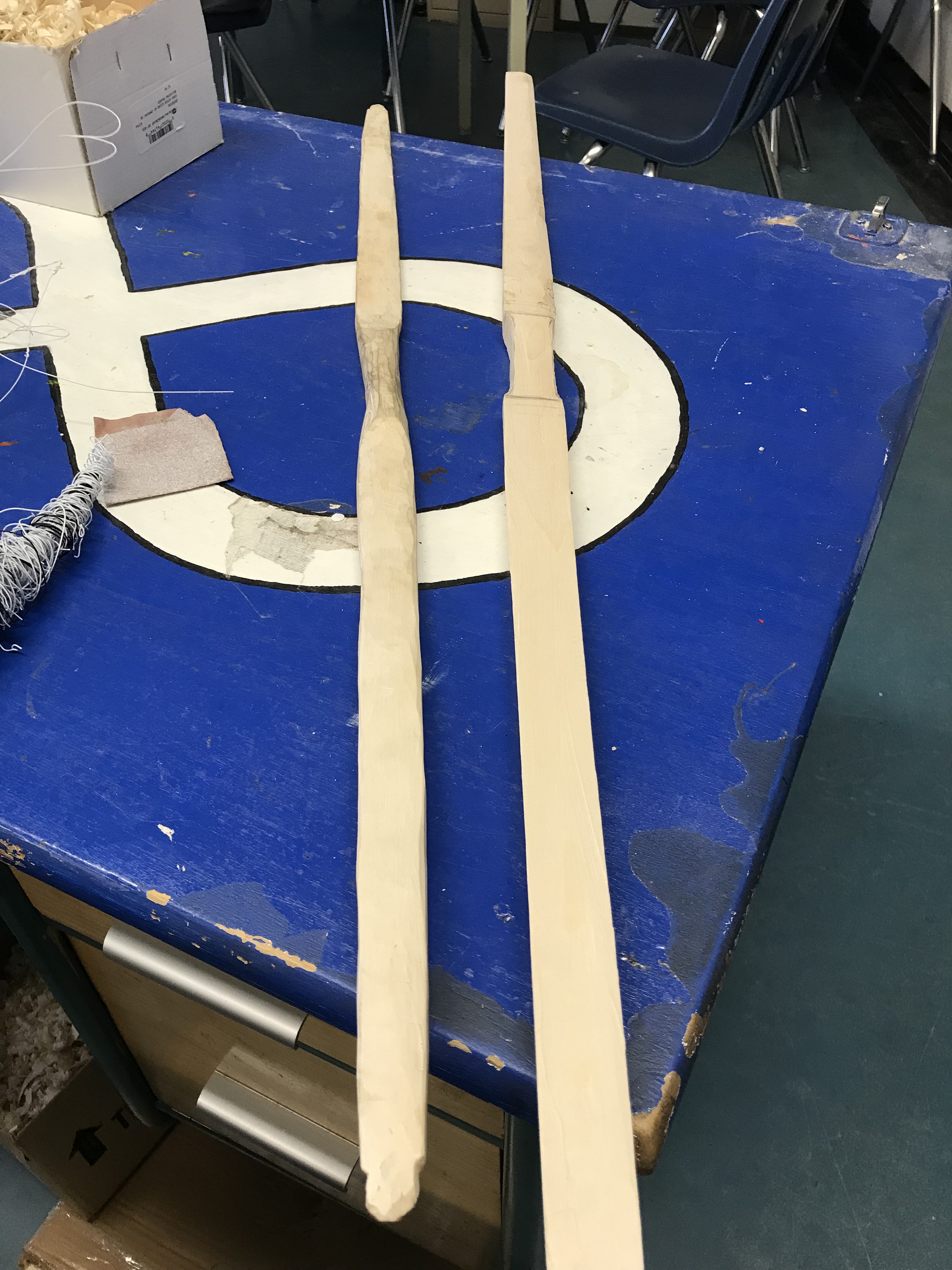
Mitiigwab – the bow. Once the tree has been cut down the wood must cure until it has dried enough to begin working it. A good rule of thumb is about 1 year for every inch of diameter. The next step is to split the wood and make staves.
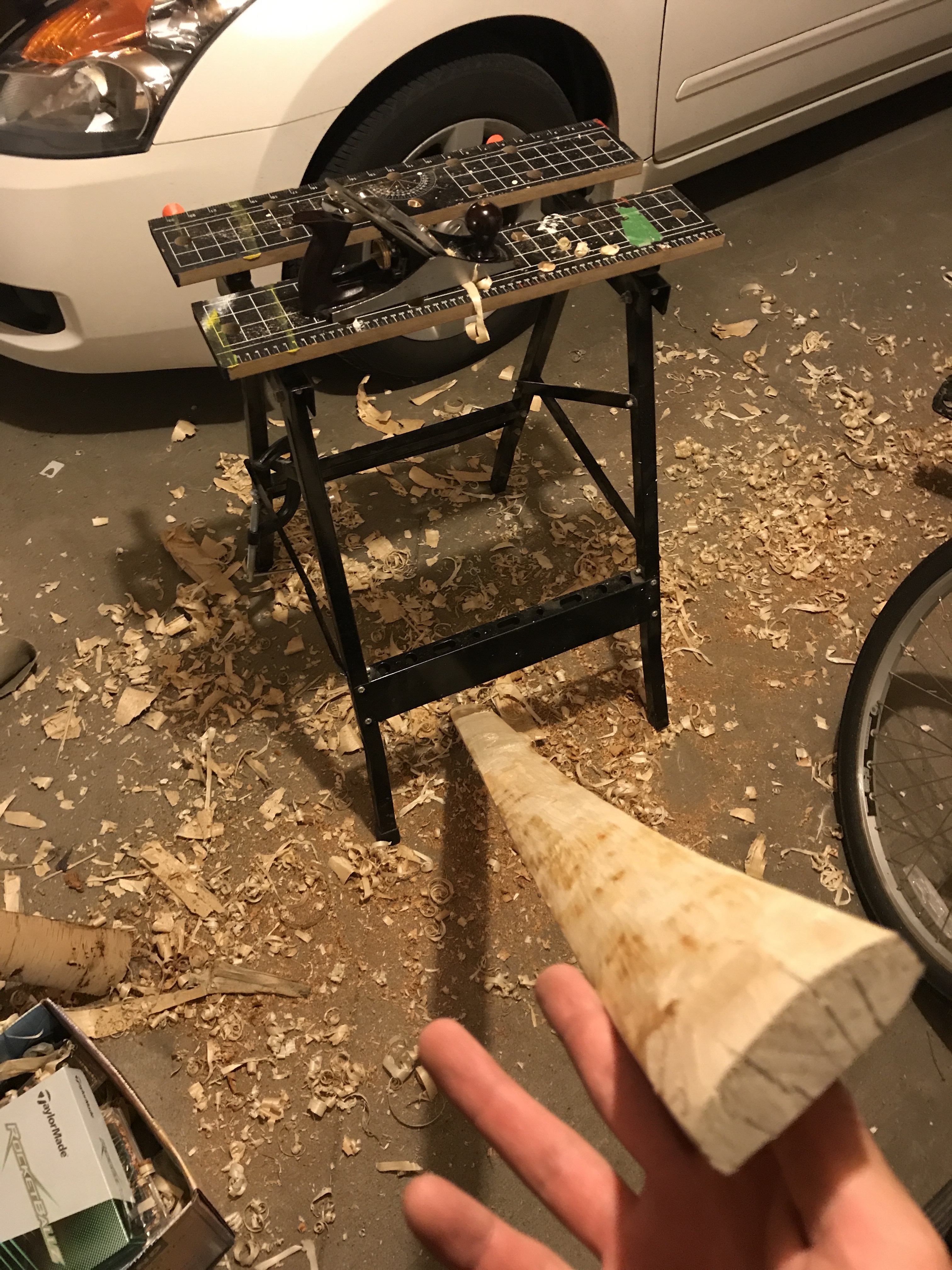
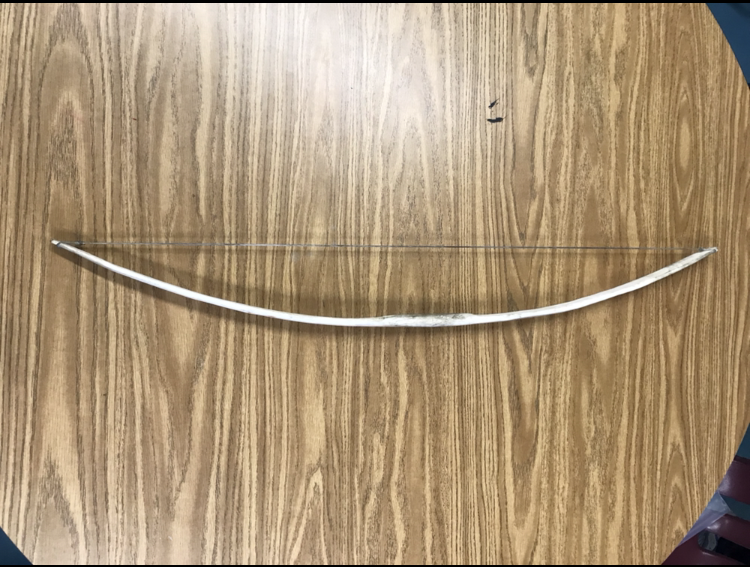
Once the staves have been cut you can begin to design and carve out your bow. Once the bow has been roughly carved out the next step is to weigh the bow and tiller to the desired draw weight.

Anishinaabemowin

This is a list of Anishinaabe words and phrases which I have compiled mainly through conversation with nimishoomis and noko (my grandfather and grandmother).

Peer Reviewed Article

Here is a link to “Generating and sustaining positive spaces: reflections on an Indigenous youth urban arts program,” a peer-reviewed article which I co-authored with our team from IPHRC.

https://journals.sagepub.com/doi/10.1177/1177180117714406

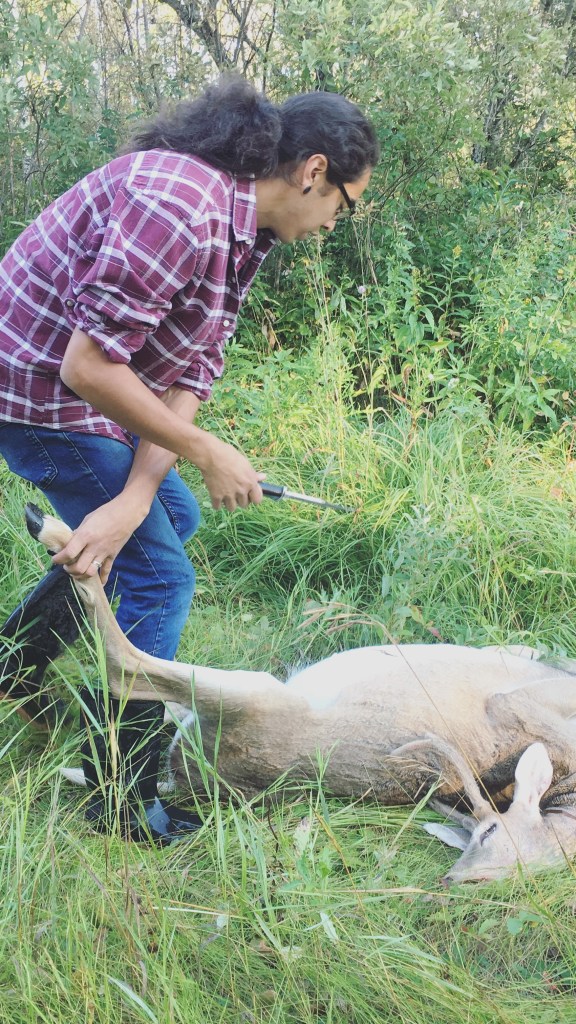
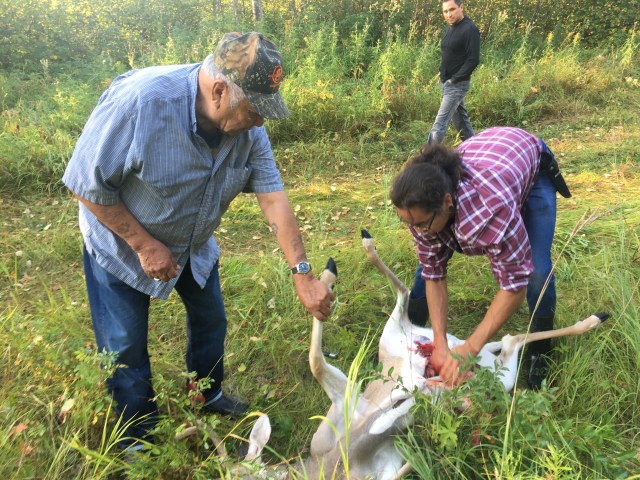
Deer Processing and Raw Hide

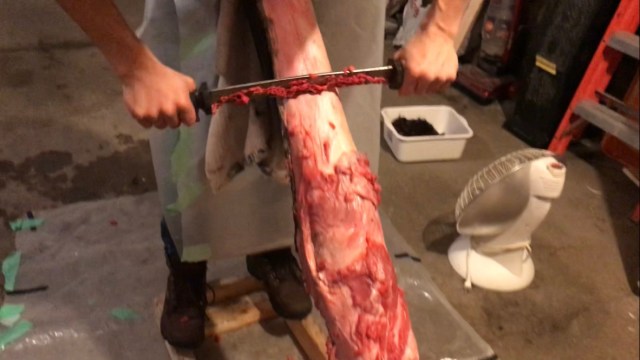
This post shows the process from hunting, to skinning, to stretching, and fleshing the hide to make raw-hide. Click on the images to read the description.

Bellow is a video of part of the process as well as photos with descriptions in the captions.

Once the animal is killed, tobacco is offered and a prayer is given. Then the animal is gutted quickly in the field to prevent bacteria growth and the meat spoiling. Then the animal is and skinned. Bellow is a gallery of the stretching and fleshing process done with students. Click on the images to read the captions and description of the process.

Noondamikwe – Beaver hunting

Amik – The Beaver:

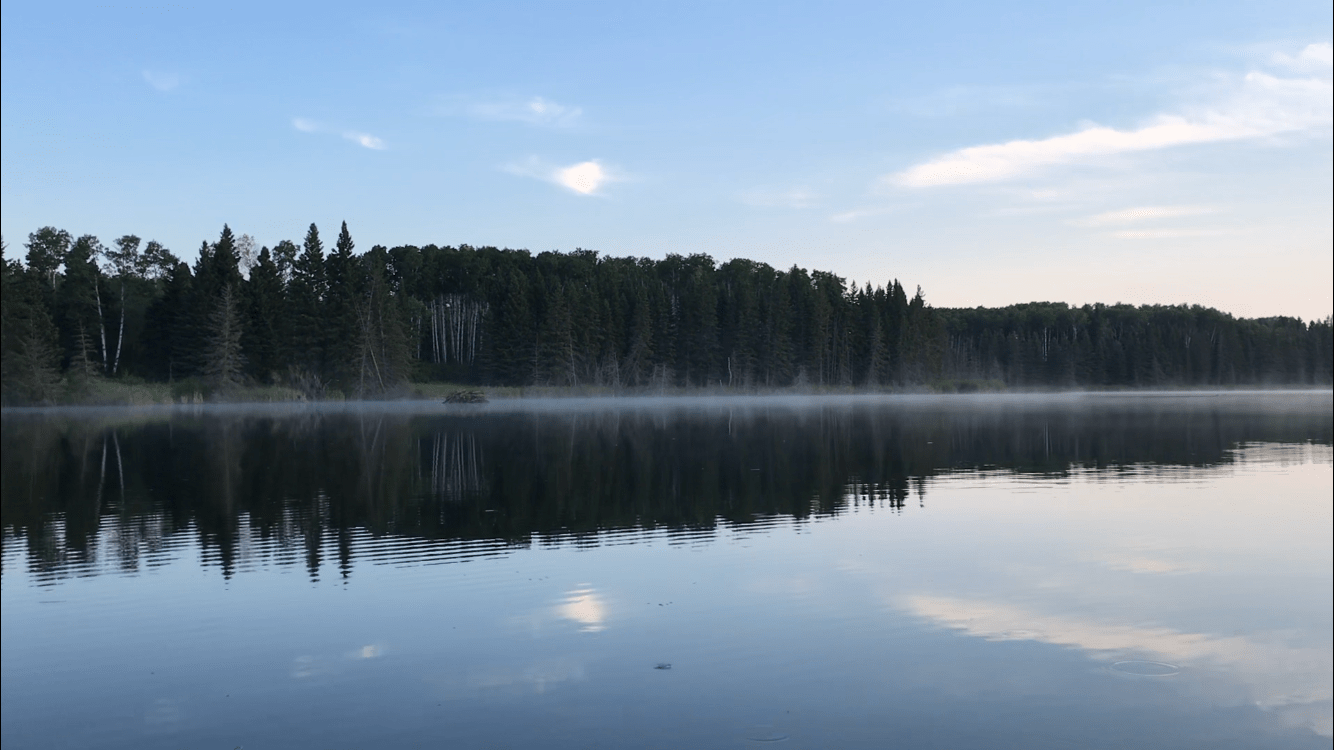
Amik can decimate a wooded area. You can see the place across the valley where the trees used to be that amik cut down. Though they are considered nuisances for this, they also change the habitat and create larger wetlands for other animals.

Amik is one of the wisest animals and appears in our creation stories. It used to be one of our primary food sources before colonization and also is a source of traditional medicine. During the fur trade, amik was one of the main resources sought after by the European fur traders to make hats. After the hats went out of style the fur trade declined and the relationship between European and the Anishinaabek shifted. Europeans no longer needed to trade with the Anishinaabek and began to colonize and viewed the Aishinaabek as barriers to progress.

Today amik is largely left alone and as a result, the population has risen. Consequently, he causes problems for some farmers and landowners. Amik is notorious for devastating the tree population and can turn a beautiful wooded area to a decimated landscape in just a year or two. Although amik is still respected. He is the only other creature that can change the flow of rivers besides humans. Amik knows the landscape and oral tradition says he can sense when climate change is coming and prepares and protects the water from danger and damage.

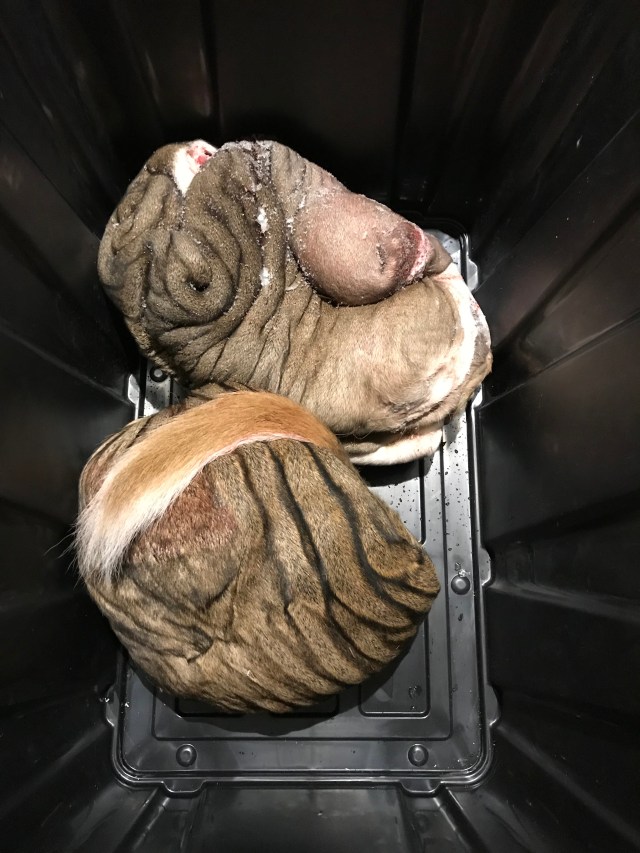
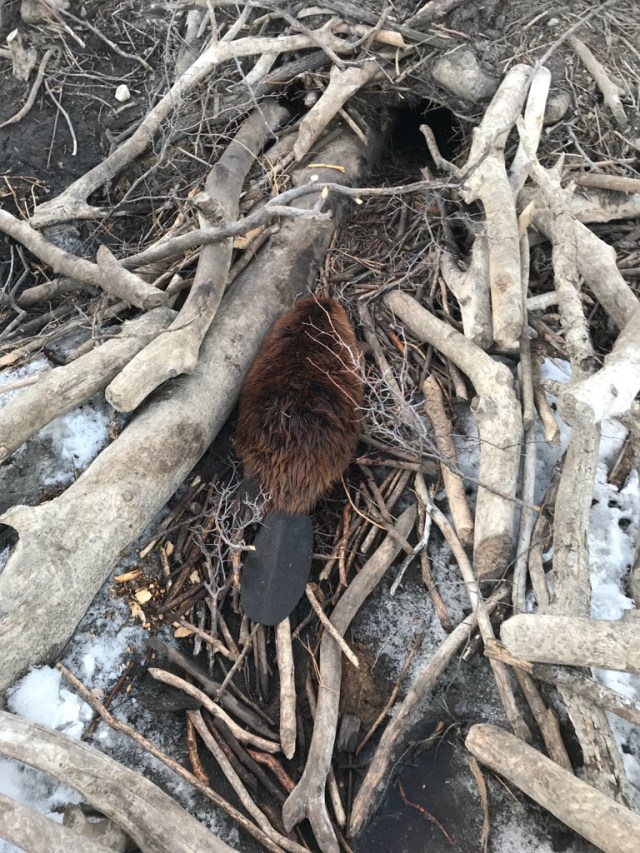
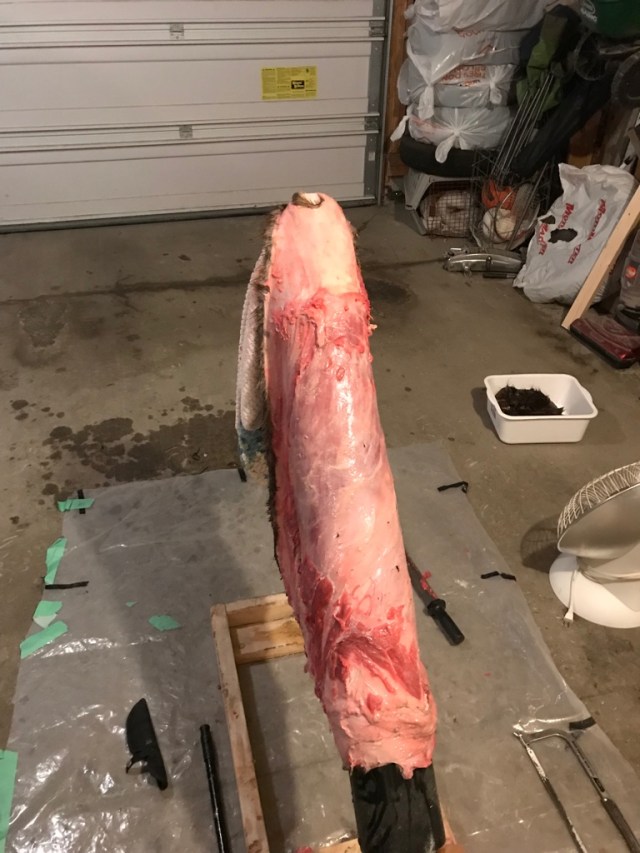
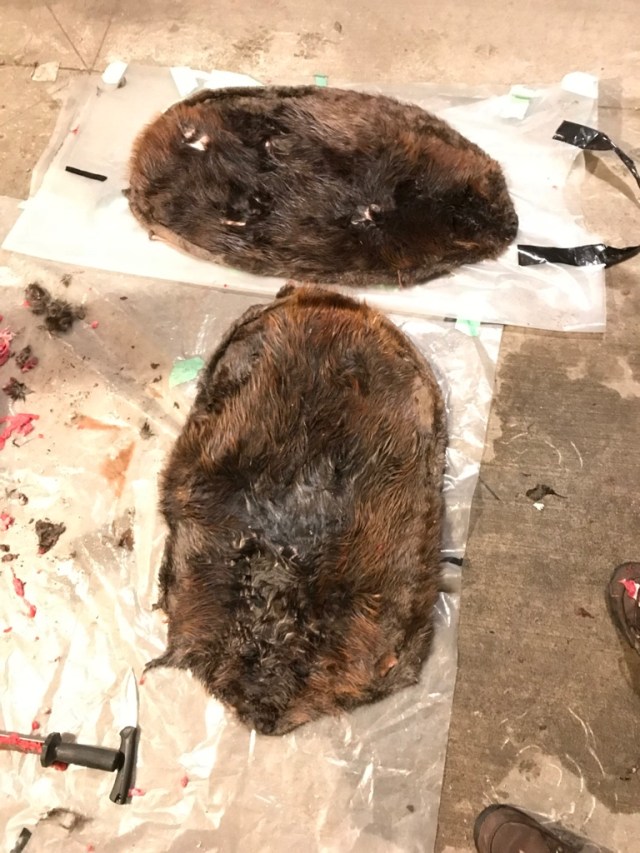
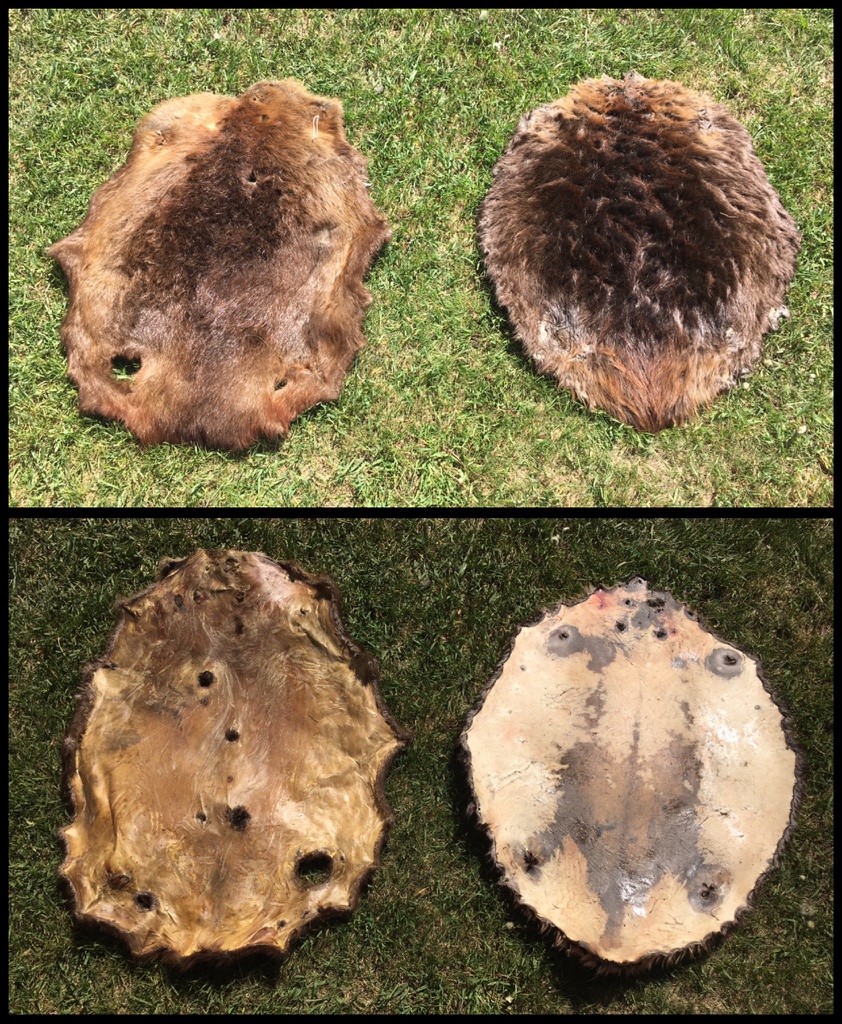
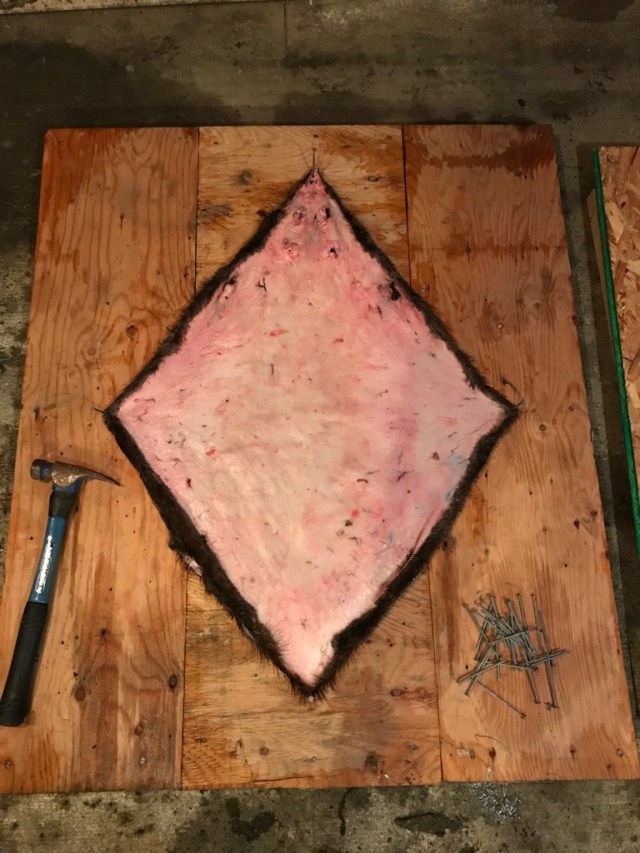
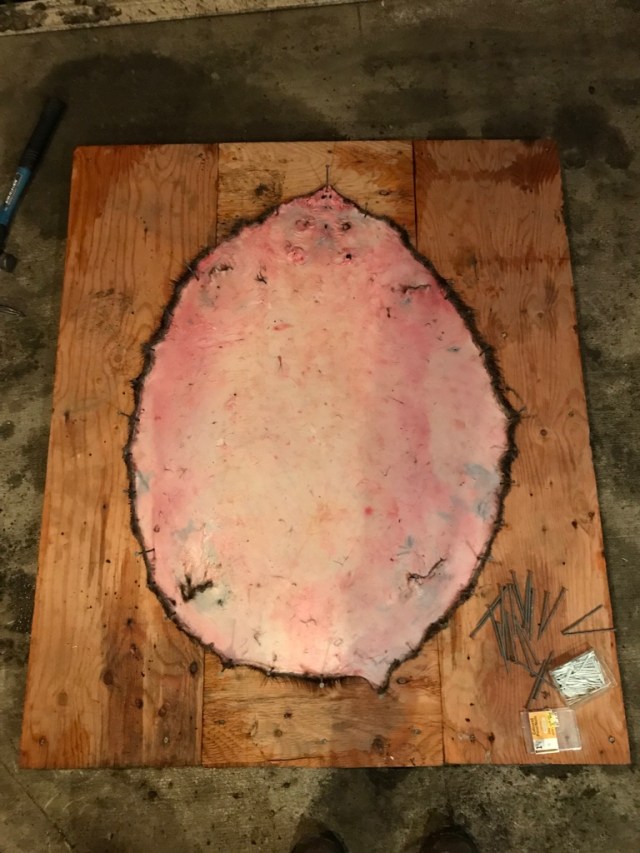
These photos show the process from hunting, to skinning, to fleshing the beaver hide, stretching it and the finished made beaver.

#progress. My first beaver vs. a more recent fleshing and stretching job.